
Potassium Humate Liquid Fertilizer

Roll over image to zoom in
$ 14.15
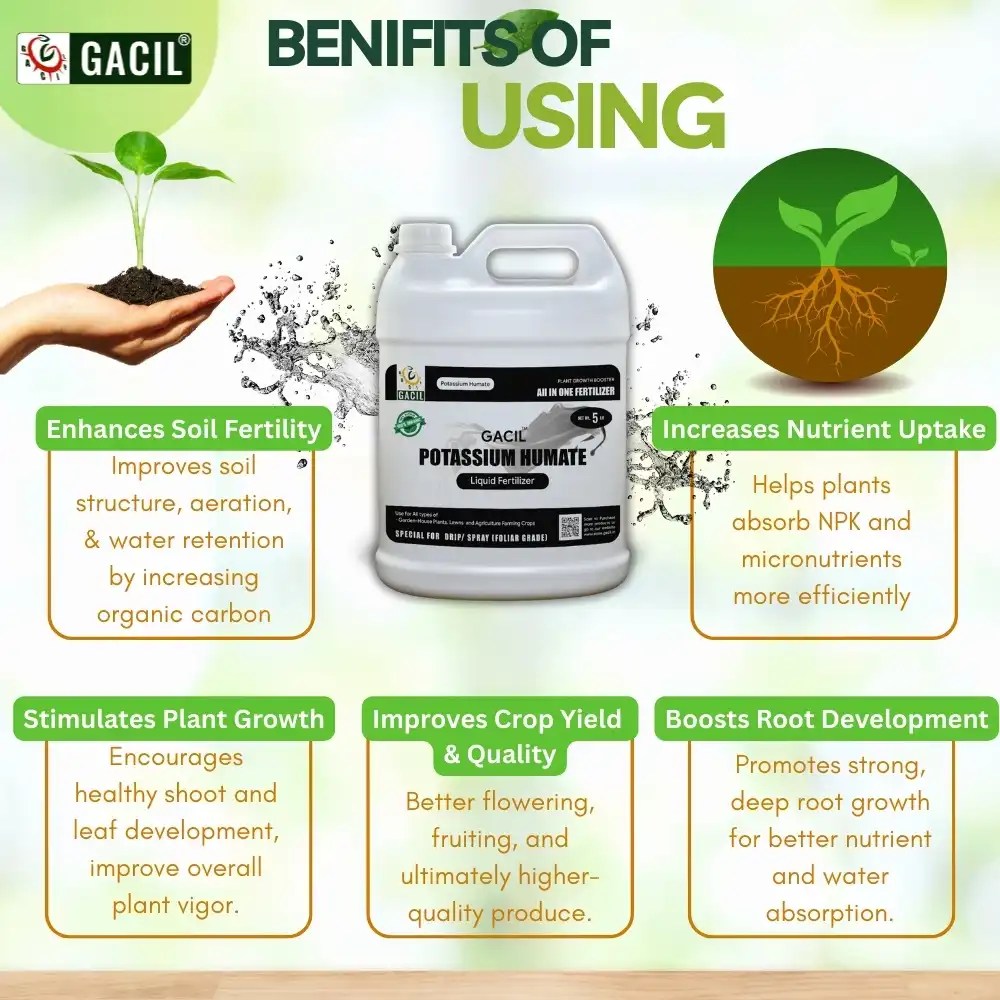
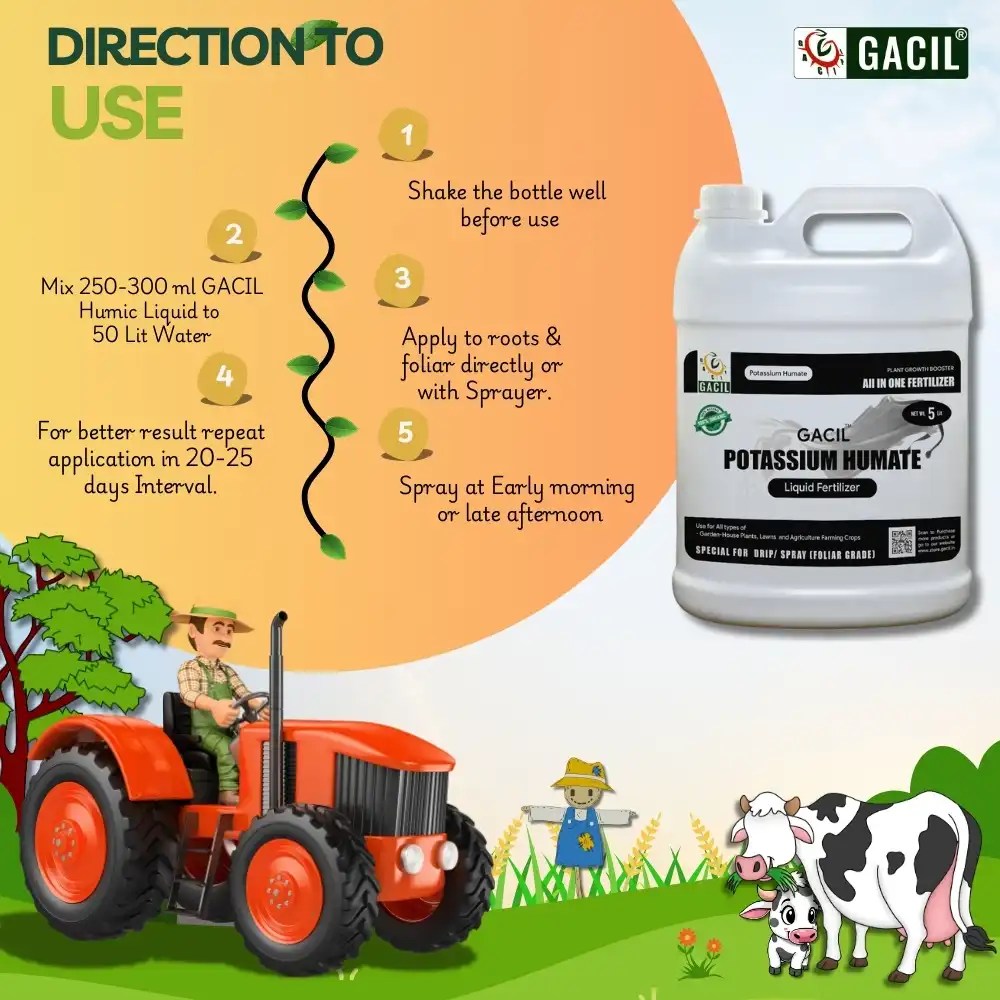
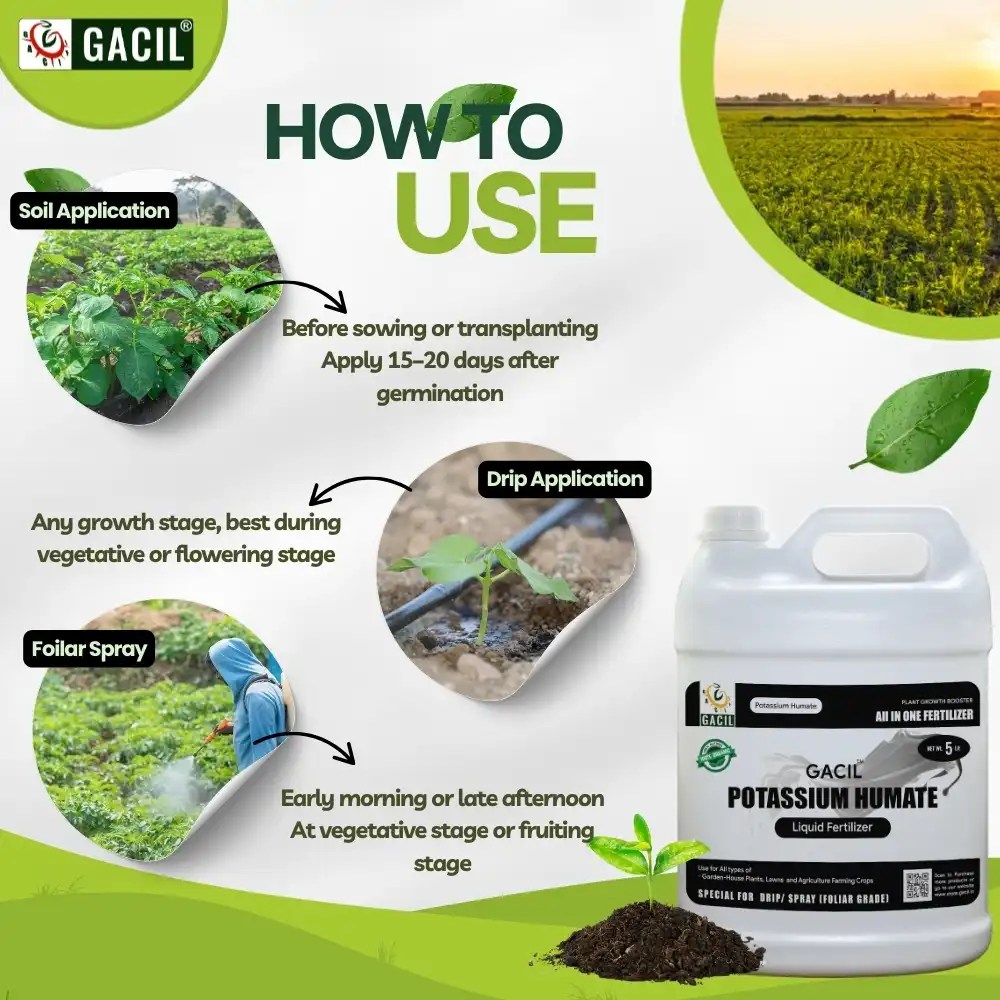
Description Potassium Humate ( Humic acid) Potassium humate, also known as humic acid fertilizer, is a soil amendment derived from naturally occurring humic substances. These substances are complex organic materials formed by the decomposition of plant and animal matter over millions of years.Potassium humate is not a traditional fertilizer in the sense that it doesn't directly provide plants with essential nutrients like nitrogen, phosphorus, and potassium. Instead, it acts as a soil conditioner, improving the overall health and fertility of the soil in several ways Dosage The dosage of Potassium Humate liquid fertilizer will vary depending on the size of your plants and the severity of the deficiency. However, a good starting point is to mix 1-2 tablespoons of Humic liquid fertilizer in 1 L of water or 500 ml/ acre. Use after 15 Days of Sowing, at interval of 15-20 Days Dosage Depends upon Crop Conditions, Growth Stage, Weather. Benefits Improves soil structurePotassium humate helps to improve soil structure by binding soil particles together, which can help to improve drainage, aeration, and water retention.Increases nutrient availabilityPotassium humate can help to chelate nutrients, making them more readily available to plants. It can also help to hold onto nutrients in the soil, preventing them from leaching away.Promotes root growthPotassium humate can help to promote root growth and development, which can help plants to better take up nutrients and water.Enhances microbial activityPotassium humate can help to stimulate the growth of beneficial soil microbes, which play an important role in breaking down organic matter and making nutrients available to plants. Things to Consider 01Nutrient compositionCheck the specific nutrients included in the humic and verify it aligns with your plants' needs. Some popular micronutrients in these blends include iron, manganese, zinc, Potassium and boron.02Application ratesAlways follow the instructions on the product label for proper dilution and application frequency to avoid overfertilization.03Plant compatibilityCertain plants might be sensitive to specific nutrients. Research the appropriate blends for your plant types.04Soil testingWhile helpful, humic fertilizers might not address underlying soil deficiencies. Consider soil testing to determine specific nutrient needs for targeted solutions.